
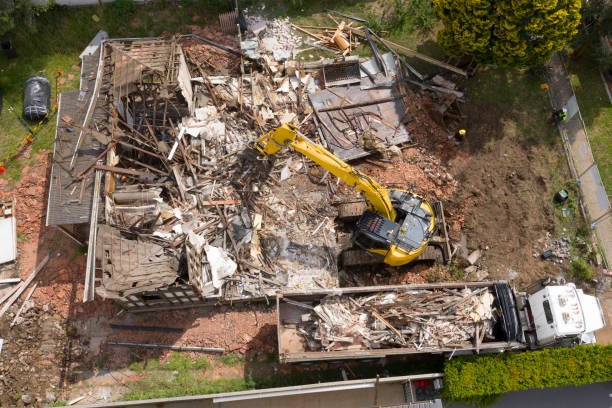
If you are planning to knock down a house, commercial building, or any structure in South Australia, one thing is non-negotiable: you need the correct permits before a single wall comes down. Many property owners and developers in Adelaide are surprised by the complexity of the approvals process — and the costly consequences of getting it wrong. Delays, stop-work orders, council fines, and even legal liability can result from proceeding without the proper documentation in place.
This guide is designed to walk you through everything you need to know about demolition permits and council requirements in Adelaide and across South Australia. Whether you are a homeowner preparing to demolish and rebuild, a property developer managing a commercial project, or a builder coordinating a major site clearance, understanding the regulatory landscape before you start will save you significant time, money, and stress.
At Demolition Adelaide, we manage the entire permits and approvals process on behalf of our clients — from Development Application lodgement to council sign-off and site handover. Here is what you need to know.
Why Demolition Permits in Adelaide Are Non-Negotiable
Demolition is classified as a form of development under South Australian planning law. This means it is governed by the Planning, Development and Infrastructure Act 2016 (PDI Act) and its associated regulations. Under this framework, demolition of a building or structure generally requires Development Approval before any physical work can commence.
The purpose of the permit system is straightforward: to protect public safety, neighbouring properties, the environment, and in some cases, heritage assets. Demolition carried out without approval can result in substantial penalties, mandatory reinstatement orders, and serious reputational damage for developers and contractors alike.
Beyond the planning framework, demolition in Adelaide also intersects with Work Health and Safety legislation, environmental protection requirements, and specific council by-laws that vary depending on which local government area your property sits within. Understanding which permits apply to your specific project — and in what order to obtain them — is where many property owners come unstuck.
What Is a Development Application for Demolition in Adelaide?
A Development Application, commonly referred to as a DA, is the primary approval pathway for demolition work in South Australia. All DAs in SA are submitted electronically through the PlanSA portal — the state government’s centralised planning and assessment system.
When you submit a DA for demolition, the application is assessed against the relevant provisions of the Planning and Design Code, which divides land across the state into zones, subzones, and overlays. Each of these zones has different rules, and what is permissible in one area may require additional scrutiny in another.
A standard residential demolition DA in Adelaide will typically require the following documentation:
A detailed site plan clearly identifying the structure or structures to be demolished, the boundaries of the site, and any structures that will remain. An asbestos survey or hazardous materials report confirming whether the building contains asbestos-containing materials and how they will be managed. A statement of the proposed method of demolition, including how waste materials will be handled and disposed of. Evidence of public liability insurance to a minimum of $20 million. Details of how dust, noise, and vibration will be managed during the demolition process. Confirmation that the required neighbour notifications have been completed.
For straightforward residential demolition projects in metropolitan Adelaide — where there are no heritage overlays, no significant trees, and no unusual site constraints — a DA can often be assessed and approved relatively quickly. However, projects involving heritage considerations, complex sites, or multiple structures will require significantly more preparation and a longer assessment timeline.
Understanding the PlanSA Portal and How Adelaide Demolition Companies Navigate It
The PlanSA portal is the single digital gateway for all development applications in South Australia, including demolition approvals. It was introduced as part of the state’s planning reform agenda to create a more streamlined, transparent, and efficient approvals process.
For property owners who have never lodged a DA before, navigating the PlanSA portal can feel overwhelming. The system requires applicants to correctly identify the relevant zone and overlay for their property, select the appropriate application type, upload compliant documentation, and pay the relevant application fees.
This is one of the core reasons why engaging a licensed Adelaide demolition contractor from the very beginning of your project is so valuable. Experienced demolition companies in Adelaide will have lodged hundreds of DAs through PlanSA and will understand precisely what documentation each council requires, how to frame the application to minimise the risk of delays or requests for further information, and how to manage the process efficiently so that your project program is not compromised.
At Demolition Adelaide, our project managers handle the entire DA lodgement process on your behalf, ensuring your application is complete, compliant, and submitted with all required supporting documentation from day one.
City of Adelaide Demolition Permits: What the CBD Requires
If your demolition project is located within the City of Adelaide local government area — covering the CBD and North Adelaide — there are additional permit requirements that apply on top of the standard Development Application.
The City of Adelaide administers a separate City Works permit system for any demolition or construction activity that impacts the public realm. This includes work that affects footpaths, roads, parklands, or any other Council-managed asset adjacent to your site.
To obtain a City Works permit from the City of Adelaide, you will typically need to provide:
A certificate of currency confirming public liability insurance of a minimum of $20 million, noting the City of Adelaide as an interested party. A detailed Traffic Management Plan showing the location of the works, hoarding or mesh placement, pedestrian signage, spotters, and distances from the kerb and property boundaries. Confirmation that affected parties in the surrounding area have been consulted prior to the commencement of works.
It is important to note that if your City Works permit application requires public consultation, it must be submitted four to six weeks before your intended start date. This is a lead time that catches many project teams off guard and can cause significant program delays if not planned for in advance.
In addition to the City Works permit, demolition projects within the Adelaide CBD that involve scaffolding, catch platforms, or cranes will require separate approvals under the City Works Guide series. For larger commercial demolition Adelaide projects, managing these overlapping permits concurrently is a critical part of programme management.
Demolition Permits for Different Property Types in Adelaide
Not all demolition projects in Adelaide follow the same approvals pathway. The type of structure being demolished, its location, its heritage status, and its relationship to neighbouring properties all influence what permits are required and how long the process will take.
Residential House Demolition Adelaide
For a standard house demolition in Adelaide — a single dwelling on a residential allotment with no heritage listing and no significant trees — the approvals process is relatively straightforward. A Development Application through PlanSA is generally required, along with a hazardous materials survey and notification to neighbours.
Some councils in the Adelaide metropolitan area may have specific local requirements around tree protection, stormwater management, or site fencing that need to be addressed as part of the application. Your demolition company should be familiar with the specific requirements of the relevant council area.
It is also worth noting that demolition of outbuildings — such as freestanding garages, sheds, and carports — may in some cases be exempt from requiring a full DA, depending on the size of the structure and whether any of the triggering criteria apply. However, this should always be confirmed with your local council or licensed demolition contractor before proceeding, as assumptions about exempt development status have led to significant compliance issues for property owners.
Commercial Demolition Adelaide
Commercial demolition projects in Adelaide — including retail centres, office buildings, warehouses, and mixed-use developments — typically involve a more complex approvals process than residential demolitions. In addition to the standard DA and City Works requirements, commercial projects may require:
A Demolition Management Plan outlining the staged approach to the work, with specific attention to structural sequencing and the protection of adjoining buildings. A Construction Environmental Management Plan addressing dust suppression, noise management, stormwater protection, and waste management. Notification to utility providers to arrange disconnection of gas, water, electricity, and telecommunications services prior to commencement. Separate approvals for the use of cranes, elevated work platforms, and other major plant in public spaces.
For multi-storey commercial demolition in Adelaide, structural engineering input is also often required to demonstrate that the proposed demolition sequence will not compromise the structural integrity of adjacent buildings or public infrastructure.
Heritage Buildings and Demolition Approval in Adelaide
One of the most complex areas of demolition permit requirements in South Australia involves heritage-listed buildings and structures. Adelaide has a significant number of buildings on both the State Heritage Register and local council heritage lists, and demolishing or even partially altering a heritage-listed building requires a separate and more stringent approvals process.
Under the PDI Act 2016, any demolition work affecting a State Heritage Place must be assessed as a Category 3 development, which involves mandatory public notification and referral to the State Heritage Council of SA for assessment. This process is significantly more time-consuming than a standard DA and requires the preparation of a Heritage Impact Statement by a qualified heritage consultant.
Even demolition work on buildings that are not themselves heritage-listed can trigger heritage requirements if the site is adjacent to a heritage place. The potential impact of the demolition on the heritage value, setting, and visual character of the neighbouring heritage building will form part of the assessment.
For property owners and developers dealing with heritage considerations in Adelaide, engaging an experienced Adelaide demolition company early in the project planning phase is essential. The earlier heritage issues are identified and addressed, the less likely they are to derail your project timeline and budget.
Asbestos Removal Requirements Before Demolition in Adelaide
In South Australia, the presence of asbestos-containing materials in a building has direct implications for the demolition approvals process. Before any demolition can commence on a building constructed or renovated prior to the late 1980s, a hazardous materials survey must be conducted by a competent person to identify the presence, location, and condition of any asbestos-containing materials on site.
This requirement is embedded in both the Work Health and Safety Regulations 2012 (SA) and the relevant codes of practice administered by SafeWork SA. Failure to conduct a pre-demolition asbestos survey is a serious compliance breach that can result in stop-work orders, significant financial penalties, and personal liability for both the contractor and the property owner.
Asbestos disposal Adelaide requirements are also strict. All asbestos-containing materials removed from a demolition site in SA must be transported by an EPA-licensed waste carrier and disposed of at an EPA-licensed landfill or waste transfer facility. Double-wrapping in heavy-duty plastic, correct labelling, and completion of waste tracking documentation are all mandatory steps in the asbestos disposal process.
South Australia also has stricter air monitoring requirements than most other Australian states — air monitoring is mandatory for both Class A and Class B asbestos removal work, not just Class A as in other jurisdictions. An independent licensed asbestos assessor must conduct this monitoring immediately before and during all licensed asbestos removal work on Adelaide demolition sites.
At Demolition Adelaide, we hold both Class A and Class B asbestos removal licences and manage all asbestos Adelaide identification, removal, air monitoring, and disposal requirements in-house, providing clients with a single point of accountability across the entire process.
Earthmoving Adelaide and Excavation Adelaide: What Permits Apply After Demolition
Once demolition is complete and the site has been cleared, many projects proceed immediately to earthmoving and excavation works as part of the site preparation phase for new construction. It is important to understand that excavation Adelaide and earthmoving activities may trigger their own separate permit and notification requirements, particularly in urban areas.
Excavation works that have the potential to affect the structural integrity of adjoining buildings, retaining walls, or public infrastructure may require a Dilapidation Report to be prepared before works commence. This documents the pre-existing condition of neighbouring structures and provides a baseline against which any claims of damage can be assessed.
In some cases, excavation work adjacent to underground utilities — including gas mains, water mains, stormwater drains, and telecommunications infrastructure — will require a Dial Before You Dig enquiry and potentially a formal permit from the relevant utility provider.
For bulk earthmoving Adelaide projects on larger commercial or industrial sites, an environmental assessment addressing the potential for soil contamination, groundwater impacts, and acid sulfate soils may also be required depending on the history of land use on the site.
Our company-owned fleet of excavators and earthmoving equipment means that Demolition Adelaide can transition seamlessly from demolition to earthmoving and site preparation, managing all associated permits and notifications as part of a single, integrated project delivery.
How Long Does the Demolition Permit Process Take in Adelaide?
One of the most common questions we receive from property owners and developers is how long the approvals process will take. The honest answer is that it depends on the complexity of the project and how well-prepared the application is when it is submitted.
For a straightforward residential home demolition Adelaide project with no heritage considerations, no significant trees, and a complete application lodged through PlanSA, approval can often be obtained within two to four weeks.
For more complex commercial or heritage projects, the process can take significantly longer — particularly if public notification is required, specialist referrals need to be obtained, or the application triggers requests for further information from the assessing authority.
The single most effective way to minimise approval timeframes is to submit a complete, well-prepared application from day one. An incomplete application that triggers a request for further information can add weeks or even months to your programme.
This is why the experience and local knowledge of your chosen Adelaide demolition company matters enormously. Demolition companies in Adelaide that have worked across multiple council areas, lodged hundreds of DAs, and built relationships with council planning and building assessment teams are better positioned to navigate the approvals process efficiently on your behalf.
Key Checklist: What You Need for a Demolition Permit in Adelaide
Before lodging your Development Application for demolition in Adelaide, make sure you have the following in place:
A completed site plan identifying all structures to be demolished and those to remain. A pre-demolition hazardous materials survey, including asbestos assessment. A proposed method of demolition statement. Evidence of $20M public liability insurance. A waste management plan addressing recycling, asbestos disposal Adelaide procedures, and landfill documentation. Neighbour notification records. A Traffic Management Plan if works will impact the public footpath or road. Heritage impact documentation if the site or adjacent properties are heritage-listed. Utility disconnection confirmation from all relevant providers. Contact details and licence numbers for the appointed licensed demolition contractor.
Why Choose Demolition Adelaide for Your Permit-Managed Project
Navigating the demolition permit process in Adelaide is not something most property owners or developers need to become experts in — that is what we are here for. As one of Adelaide’s most experienced demolition companies in Adelaide, we provide a fully managed service that takes the burden of approvals, documentation, and compliance off your plate entirely.
From the moment you engage Demolition Adelaide, our project managers begin work on your DA lodgement, coordinate the required surveys and reports, manage council correspondence, and ensure that every aspect of your project is compliant with SA WHS legislation, EPA requirements, and local council regulations.
We work with residential homeowners, property developers, commercial builders, and government clients across Greater Adelaide and regional South Australia. Whether your project is a single house demolition Adelaide, a large-scale commercial strip-out, or a complex industrial decommissioning, we have the licences, the experience, and the local knowledge to deliver it safely, compliantly, and on programme.
Call us today on 08 7111 3883 or submit your project details online for a free, no-obligation tender. We respond within 24 hours.